
 Chinese
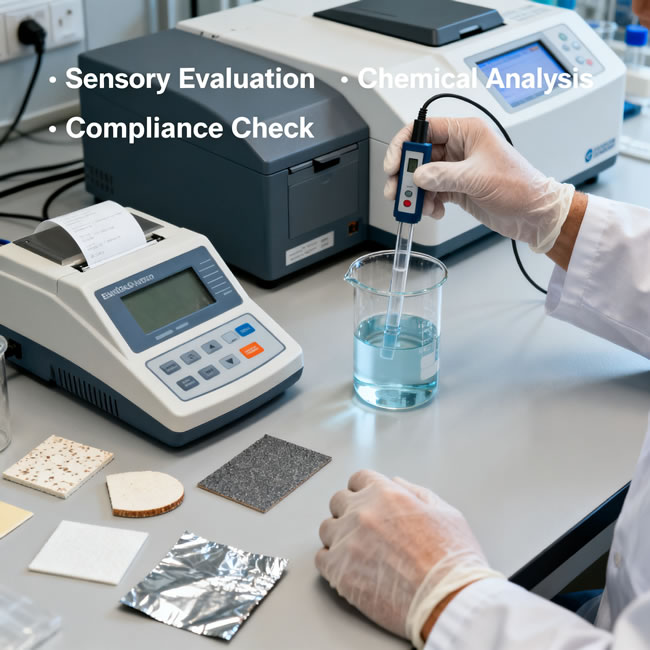
EU Food Contact Materials (FCMs) Testing
Author: admin
Date: 2024-09-25 12:15:00
Visits: 1508
1. What is EU Food Contact Materials (FCMs) Testing?
EU Food Contact Materials (FCMs) testing refers to the compliance assessment conducted on materials and articles that come into direct or indirect contact with food (such as food packaging, kitchenware, tableware, food processing equipment, etc.). Its core purpose is to scientifically verify whether the migration of chemical substances from the materials to food under normal or foreseeable use conditions complies with EU regulatory requirements, ensuring no harm to human health and no unacceptable changes to food composition, flavor, or texture.
The EU implements strict supervision over FCMs through a unified legal framework. All relevant products entering the EU market must pass compliance testing to prove they meet safety standards. Such testing covers not only chemical composition analysis of the materials themselves but also multiple dimensions including migration testing and sensory testing, which is a mandatory requirement for products to enter the EU market.
2. Introduction to EU Food Contact Materials Marking
To ensure consumers can clearly identify food contact purposes, EU regulations specify clear requirements for FCMs marking. The core标识 is the "Wine Glass & Fork Symbol", which originates from Annex II of Regulation (EC) No 1935/2004 and serves as the universal symbol for food contact use.
Marking Usage Rules:
When the product's purpose is unclear, the "Wine Glass & Fork" symbol must be marked; if the purpose is clear (e.g., dedicated coffee cups), it can be supplemented with text instructions (such as "For Food Contact").
The marking must be clear and durable to ensure it is not easily worn during normal consumer use.
Some specific materials (such as ceramics and plastics) may require additional marking of material type or usage conditions (e.g., "Not Suitable for Microwave Ovens").
3. Significance of FCMs Testing for Enterprises
For enterprises planning to enter the EU market, FCMs testing is a core link in product compliance, and its significance is reflected in the following three aspects:
1. "Passport" for Compliance Access
The EU classifies FCMs into mandatory supervision. Products that fail compliance testing are strictly prohibited from being sold in the EU market. Passing the test and meeting regulatory requirements is the basic prerequisite for enterprises to enter the EU market.
2. "Firewall" to Avoid Market Risks
The EU has established the "Rapid Alert System for Food and Feed" (RASFF). Once non-compliant FCMs are found, recall procedures will be initiated immediately, and enterprises will be punished. Data in 2024 shows that there were more than 1,200 RASFF notifications for FCMs products due to excessive migration, involving enterprises facing heavy fines and brand reputation losses. Advance testing can effectively avoid such risks.
3. "Bonus Point" to Enhance Brand Competitiveness
In the EU consumer market, "compliance certification" is an important endorsement of product safety. Products that have passed FCMs testing are more likely to gain consumer trust, especially in niche areas such as maternal and infant products and high-end kitchenware, where compliance certification has become a key advantage for enterprises in differentiated competition.
4. EU FCMs Certification Process
Enterprises need to follow the following steps to complete FCMs compliance certification to ensure products meet EU regulatory requirements:
Product Classification and Regulation Matching: Determine the applicable EU regulations (e.g., EU No 10/2011 for plastics) and harmonized standards (e.g., CEN/ISO testing methods) based on product materials (such as plastics, ceramics, metals) and purposes.
Technical Document Preparation: Organize technical documents such as product ingredient lists, production process descriptions, and material safety declarations to ensure that the substances used in the materials are within the EU authorized list (e.g., monomers and additives in plastics must comply with the annex of EU No 10/2011).
Entrust Third-Party Laboratory Testing: Select EU-recognized third-party testing institutions (such as SGS, Intertek) to conduct core tests including migration testing (simulating different food types, temperatures, and contact times), sensory testing, and heavy metal detection.
Risk Assessment and Compliance Declaration: Based on the test results and combined with the risk assessment guidelines of the European Food Safety Authority (EFSA), prepare a "Declaration of Conformity" (DoC) stating that the product complies with the requirements of Regulation (EC) No 1935/2004.
Product Marking and Market Access: Mark the "Wine Glass & Fork" symbol and necessary instructions on the product or packaging, and enter the EU market after completing the compliance process.
5. Relevant Standards and Directives
The EU FCMs regulatory system consists of "framework regulations + specific material directives". The core regulations and standards are as follows:
Type of Regulation/Standard | Specific Name | Core Content |
|---|---|---|
Framework Regulation | (EC) No 1935/2004 | Establishes general safety principles for FCMs, requiring materials to be non-hazardous to health and not alter food characteristics, and regulates marking, traceability, and new substance approval processes. |
Plastic-Specific Regulation | EU No 10/2011 | Specifies the authorized substance list, Specific Migration Limits (SML), and Overall Migration Limits (OML) for plastic FCMs, covering special materials such as recycled plastics. |
Production Specification | (EC) No 2023/2006 | Defines Good Manufacturing Practices (GMP) for FCMs, requiring production environments, quality control, and raw material selection to meet safety standards. |
Testing Standard | CEN/ISO Series Standards | Such as EN 1186 series (migration testing methods) and EN 13130 series (plastic testing), specifying specific testing procedures and technical parameters. |
6. Precautions
Enterprises should focus on the following issues during the FCMs compliance process to avoid compliance risks due to detailed omissions:
Regulatory Dynamic Updates: EU regulations are continuously revised. For example, (EC) No 1935/2004 was revised by (EU) 2019/1381 to strengthen the transparency of risk assessment. Enterprises need to regularly pay attention to the official websites of the European Commission (DG SANTE) and the European Food Safety Authority (EFSA) to ensure products meet the latest requirements.
Material Change Notification: If product materials, production processes, or suppliers change, re-testing and verification are required to avoid excessive migration due to raw material replacement.
Full Supply Chain Traceability: Regulations require the establishment of a full-chain traceability system from raw materials to finished products. Enterprises need to retain supplier qualification certificates, test reports, and other documents for inspection by regulatory authorities.
Accuracy of Simulated Usage Scenarios: During testing, simulation solutions (such as 4% acetic acid for acidic foods and 95% ethanol for oily foods) and contact conditions (temperature, time) should be selected according to the actual use of the product to ensure test results are consistent with real usage conditions.
7. Authoritative Support and Resources
The EU has established the European Union Reference Laboratory for Food Contact Materials (EURL-FCM), which provides scientific and technological support to member states, organizes laboratory comparisons and training, and maintains a reference material database. Enterprises can obtain technical guidelines and testing methods through its official website or contact for compliance consultation (email: jrc-eurl-fcm@ec.europa.eu).
Send Inquiry