Chinese
1. Project Background
A certain doll toy factory is an enterprise specializing in the design, production and sales of various doll toys such as plush and plastic products. Its products are deeply loved by consumers at home and abroad for their lovely appearance and high-quality materials. With the development and expansion of the enterprise, expanding the European and American markets has become an important strategic goal. However, the EU and the US have formulated strict regulatory standards for toy products, such as the EU's Toy Safety Directive (2009/48/EC) and the harmonized standard EN 71 series, as well as the US CPSC (Consumer Product Safety Commission) regulations and ASTM F963 standards. If the products fail to meet these standard requirements, they will face risks such as customs detention, market recall, and fines, which will seriously affect the enterprise's export plan and brand reputation. To ensure the smooth entry of products into the European and American markets, the doll toy factory chose to cooperate with our company, a professional testing service company, to carry out a comprehensive export inspection and certification project for the EU and the US.
2. Project Objectives
The purpose of this project is to enable all kinds of doll toy products of the doll toy factory to fully comply with the relevant toy safety regulations and standards of the EU and the US through our professional inspection and certification services, successfully obtain the corresponding inspection and certification certificates, ensure that the products pass the customs inspection of the EU and the US smoothly, avoid market access risks, ensure the legal sales of products in the European and American markets, and enhance the competitiveness of products in the international market.
3. Content of Inspection and Certification Project
(1) Inspection and Certification Project for EU Market
EN 71-1 Mechanical and Physical Properties Test: Test the size, shape, weight, edges, tips, protrusions, ropes and elastic cords of toys to ensure that toys will not cause mechanical injuries such as suffocation, choking, cuts and stabs to children under normal use and foreseeable reasonable abuse. For example, for small parts such as eyes and noses of plush dolls, the pulling force must be tested to meet the standard to prevent children from pulling them off and误食ing them.
EN 71-2 Flammability Test: Evaluate the flammability of toy materials to prevent toys from burning rapidly when exposed to fire, causing fire hazards. The test scope includes plush fabrics, plastic parts, filling materials, etc., which must meet the combustion speed and combustion range requirements specified in the standard.
EN 71-3 Specific Element Migration Test: Detect the content of migratable harmful elements in toy materials, such as lead, mercury, cadmium, chromium, arsenic, selenium, antimony, barium, etc. If these elements exceed the standard limits, they will enter the human body through children's biting and touching, causing serious harm to children's nervous system, digestive system, immune system, etc.
CE Certification: After the product passes the above tests, our company assists the enterprise to complete the CE certification application, guides the enterprise to prepare technical files (TCF), including product manuals, test reports, design drawings, etc., to ensure that the product meets the relevant requirements of CE certification, and finally enables the product to be affixed with the CE mark and have the qualification to enter the EU market.
(2) Inspection and Certification Project for US Market
ASTM F963-17 Toy Safety Standard Test: This standard covers various aspects of toys such as mechanical and physical properties, flammability, and chemical properties. The mechanical and physical property test is similar to EN 71-1, but some requirements are more stringent; the flammability test has clear combustion performance indicators for different types of toy materials; the chemical property test includes not only specific element migration but also phthalate content test.
Tests Related to CPSC Regulations: Lead Content Test: According to CPSC regulations, the lead content in paint and surface coatings accessible in children's products shall not exceed 0.009%, and the lead content in the base material shall not exceed 0.1%. Our company will test the lead content of toy paint coatings, plastic substrates, etc.
Phthalate Test: The use of specific phthalates (such as DEHP, DBP, BBP, DINP, DIDP, DNOP) with a concentration exceeding 0.1% in children's toys and children's care products is prohibited. Our company will test the phthalate content of plastic parts in toys (such as the hands, feet and clothes of dolls).
CPC Certification: Children's Product Certificate (CPC) is a mandatory certificate required by the US CPSC for children's products. After the product passes ASTM F963-17 and CPSC-related tests, our company issues a CPC certification certificate for the enterprise based on the test results, proving that the product meets the requirements of US children's product safety regulations and facilitating the sale of the product in the US market.
4. Project Implementation Process
Preliminary Communication and Sample Receiving: At the beginning of the project, our company conducted detailed communication with the doll toy factory to clarify the enterprise's product types, export destinations, expected goals and other information. Subsequently, the enterprise provided representative doll toy samples according to our company's requirements, including products of different materials and styles, to ensure that the samples are representative.
Test Plan Formulation and Confirmation: Based on the relevant regulations and standards of the EU and the US and the product information provided by the enterprise, our company formulated a detailed test plan, clarifying the test items, test basis, test methods, sample quantity and other contents, and confirmed with the enterprise to ensure that the test plan meets the enterprise's needs.
Laboratory Testing: Our company arranged professional technicians to conduct tests in laboratories with CNAS, CPSC and other qualification certifications. The test process is operated in strict accordance with standard methods to ensure the accuracy and reliability of test data. During the test process, if any non-conformities are found in the product, communicate with the enterprise in a timely manner and provide technical guidance and improvement suggestions.
Problem Rectification and Re-inspection: The enterprise rectifies the products according to the improvement suggestions put forward by our company, and submits samples for re-inspection after the rectification is completed. Until all test items of the product meet the standard requirements.
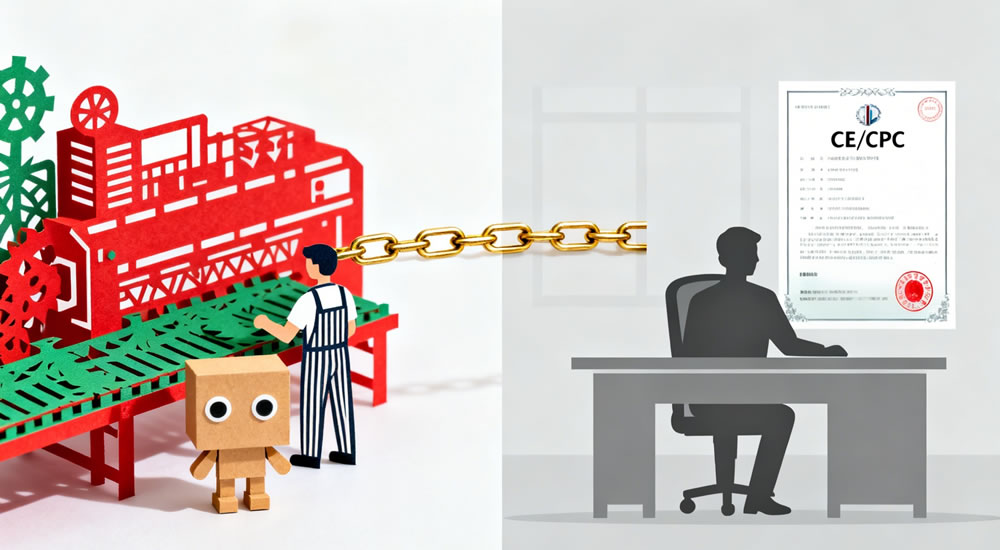
Certification Application and Certificate Issuance: After the product passes all tests, our company assists the enterprise to complete the application process for CE certification and CPC certification, and submits relevant test reports and technical documents. After being approved by the certification body, the corresponding certification certificate is issued.
5. Project Achievements
Through this comprehensive inspection and certification project, all kinds of doll toy products of the doll toy factory successfully passed all test requirements of the EU EN 71 series standards, CE certification, as well as the US ASTM F963-17 standards, CPSC regulations and CPC certification, and successfully obtained CE certification certificates and CPC certification certificates. When the products were exported to the EU and the US, they passed the customs inspection smoothly, and there were no detentions, recalls and other situations caused by products failing to meet the standards. Up to now, the sales volume of the enterprise's doll toys in the European and American markets has grown steadily, the market share has gradually expanded, and the brand awareness has also been significantly improved.
6. Project Value and Significance
The successful implementation of this inspection and certification project not only helped the doll toy factory solve the access problem of exporting to the European and American markets and avoid potential trade risks, but also brought various values to the enterprise. Firstly, it improved the quality and safety level of products and enhanced consumers' trust in products; secondly, it expanded the international market space and injected new impetus into the development of the enterprise; finally, it established a good brand image of the enterprise and laid a solid foundation for the long-term development of the enterprise in the international market.
With a professional technical team, rich inspection and certification experience and a complete service system, our company has provided high-quality export inspection and certification services for many toy enterprises. We will continue to uphold the service concept of "fairness, science, accuracy and efficiency" to escort the export of enterprises' products and help enterprises achieve greater success in the international market.